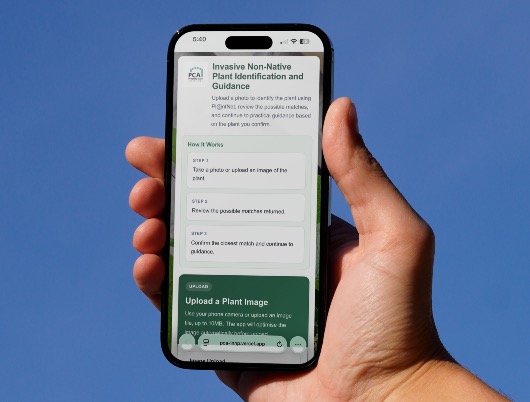
A new app launched by national trade body the Property Care Association (PCA) is set to help gardeners, landscapers and horticulturalists take early action on invasive non-native plants including Japanese Knotweed, bamboo and Giant hogweed.
The PCA Plant Risk App helps with identification of species and provides a hazard rating as well as providing access to advice on appropriate action.
Invasive non-native plant species can cause a range of issues from damage to property and impacting on native eco-systems to causing injury.
Japanese Knotweed and certain types of bamboo spread quickly and can cause hard landscape damage, while buddleia is known to colonise masonry which can make walls and chimneys unstable.
Contact with Giant hogweed may produce a skin reaction that is antagonised by exposure to sunlight and can result in painful blisters, while Himalayan balsam tends to shade out native plants and creates problems around watercourses.
 Daniel Docking is Technical Manager at the PCA and played a key role in the development of the PCA Plant Risk App. He said: “Invasive plants are not just about whether a species appears on a list. The risk often depends on the plant, the site and the context in which it is growing.
“While Japanese knotweed is often seen as the main concern, plants such as bamboo, buddleia and other problematic vegetation such as bramble can also create nuisance, management issues or biosecurity concerns in certain environments.
“There are also species that are commonly available to buy, such as Virginia creeper, that are also listed in Schedule 9 of the Wildlife and Countryside Act 1981, which means it is the property-owners responsibility to ensure they are not allowed to spread into the wild.”
Gardeners looking for assistance in identifying potential invasive non-native plants can upload a photograph, ideally including leaves, stems, flowers and overall growth habit, to the PCA Plant Risk App which will help confirm species using the Pl@ntNet database.
A short series of scenario-based questions will follow, which will produce a hazard-rating indication along with advice that sets out what action should be taken, what to avoid and whether specialist help is needed.
In instances where a survey or management plan is strongly recommended, gardeners can use the site postcode to search for PCA members who specialise in invasive weed control.
The app also includes a Learning Hub, with access to PCA Guidance, Module 0 structured learning for users who want a clearer understanding of invasive plants and links to external resources.
Daniel added: “The app is designed to be a useful tool for gardeners, landscapers and horticulturalists, particularly where early identification and practical biosecurity advice could help prevent problems from escalating.
“The earlier problematic plants are recognised, the easier it is to manage spread, reduce disruption and limit potential costs.”
The PCA Plant Risk App is available now at: https://www.property-care.org/articles/pca-plant-risk-helping-users-identify-plant-risks-earlier