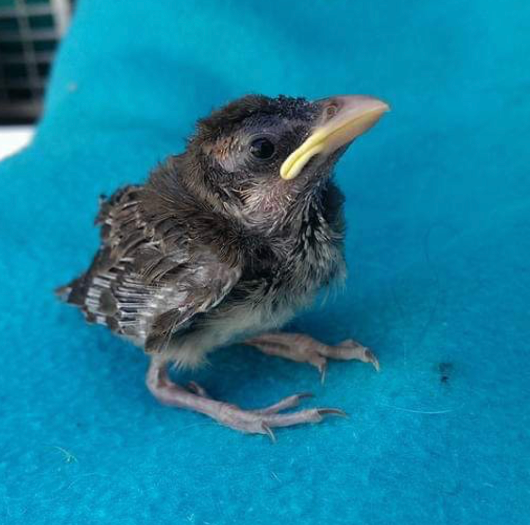
Baby bird season is upon us and as we move into spring and slightly warmer weather, the Scottish SPCA has described the difference between a nestling bird and fledgling bird and what to do if you come across either.
Depending on what species they are, birds will build their nests in different places, including trees, on the rooftop of a building, on the ground or on a cliff. The nest protects the eggs and the parents incubate until the baby birds are ready to hatch.
The amount of time a baby bird will spend developing in a nest will depend on what species they are. Baby birds (nestlings) will remain in the nest, being fed and looked after by their parents until they are old enough to start learning to fly (fledglings).
So how can we tell the difference between the two? The Scottish SPCA has detailed that a nestling will either be fluffy, sparsely feathered or have no feathers at all. It is unable to grip with its feet so this is a good indication of it being a nestling. A nestling is too young to survive out of the nest and is highly vulnerable.
If you come across a nestling and you know where the nest is, you can carefully put the bird back into the nest. If the nest location is unknown, you can create a replacement using a small cardboard box and line it with moss, grass and tissue before placing the makeshift nest in a bush or tree near to where the nestling was found so that its parents can feed it from there. It is advised to watch from a distance and the parents should come to attend to the young bird.
A fledgling is a fully-feathered/mostly-feathered young bird, usually with a short, stumpy tail. It is perfectly normal for a fledgling to spend time outwith the nest when it’s learning to fly. It’s highly likely that it doesn’t require our help or intervention and, in most cases, the parents will be watching over them from nearby. It is usually best to leave them alone as it is very common for well-meaning people to disturb or accidentally rescue a baby bird when it doesn’t need rescued at all. For more information, visit the Scottish SPCA website.
Sarah Auldsmith, Rescue Team Lead at the Scottish SPCA, said: “It’s important to leave a fledgling bird alone as much as possible, unless there is a threat of say a cat or dog, in which case we would suggest to the public that they should try find a nearby branch in a tree or shrub to put the fledgling.
“If someone is concerned about a bird being injured or lethargic, then we would advise them to get in touch with us.”
The Scottish SPCA see a large number of nestlings and fledglings mistakenly brought into its National Wildlife Rescue Centre at Fishcross, Alloa, when their parents are likely nearby watching over their young. This can cause distress to the bird and its parents, and unnecessary intervention when the bird is going through a natural process.
If you do suspect that a bird is injured or unwell, please contact the Scottish SPCA Animal Helpline on 03000 999 999.
Please read further information on buying responsibly and protecting animal welfare.