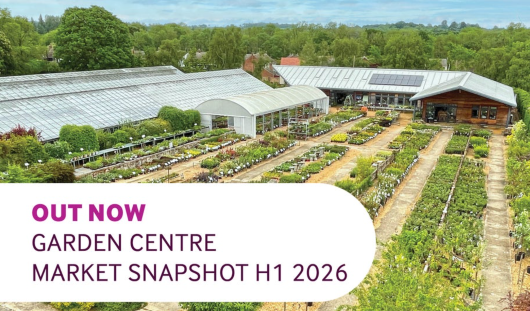
Christie & Co has highlighted some of the key takeaways from its latest Garden Centre Market Snapshot and commented on its experiences and insights gained from another six months at the forefront of the garden centre transactional market.
The UK garden centre sector has continued to demonstrate resilience and adaptability during the first half of 2026. Despite ongoing cost pressures, consumer demand remains robust, supported by enduring lifestyle trends, growing interest in wellbeing and outdoor living, and an increasingly diversified retail offering.
Transaction activity in the sector also remains strong, as buyer demand continues to exceed supply, and well-positioned operators are attracting significant interest from across the market.
DEMAND CONTINUES TO OUTWEIGH SUPPLY
One of the main themes of H1 2026 has been the strength of buyer demand, as corporate operators, regional groups and first-time buyers have all remained active, creating a competitive market for quality opportunities. Well-invested businesses with multiple income streams and clear growth opportunities continue to command significant buyer attention.
CONSOLIDATION REMAINS A KEY THEME
Market consolidation continues at pace, with acquisitive operators such as British Garden Centres and Blue Diamond actively expanding their portfolios.
Alongside established groups, independent operators and lifestyle buyers remain a significant force in the market. In the first half of 2026, 50% of garden centre sales completed by Christie & Co in this period were acquired by a first-time buyer, while 100% of the sites sold to new-to-sector entrants were following a fully open marketing campaign.
REASONS FOR SALE
Many sales continue to be driven by retirement, with two-thirds of transactions we completed in H1 2026 coming as a result of owners stepping back from the industry after many years of ownership. Other less commonly found reasons for sale have included diversification and strategic disposal.
Notably, we have seen no distress-sale completions during the first half of 2026, highlighting the underlying strength and stability of the sector.
THE IMPORTANCE OF DIVERSIFICATION
While overall trading performance remains generally positive, profitability pressures continue to impact operators as a result of rising employment costs, energy prices and inflation. Businesses are increasingly focusing on operational efficiency and alternative revenue streams.
The strongest-performing garden centres are now destination-led businesses that combine traditional horticultural retailing with cafés, restaurants, farm shops, concessions and leisure experiences. Buyers continue to favour these models, attracted by their broader customer appeal and multiple income streams, and the Horticultural Trades Association reported a 9% year-on-year increase in café and restaurant sales during May 2026.
OUTLOOK FOR THE REST OF 2026
Looking ahead, demand for quality garden centre businesses is expected to remain high from both larger operators and new entrants to the sector. Garden centres and farm shops with diversified income streams and clear opportunities for future growth are likely to continue attracting significant buyer interest.
Regional operators continue to seek acquisition opportunities, while larger transactions are increasingly being structured through leasehold agreements and share sales. For owners considering their options, market conditions remain favourable, particularly where businesses are well-invested and professionally presented.
For more insights, read our Garden Centre Market Snapshot 2026 here: https://www.christie.com/news-resources/publications/garden-centre-snapshot-h1-2026/