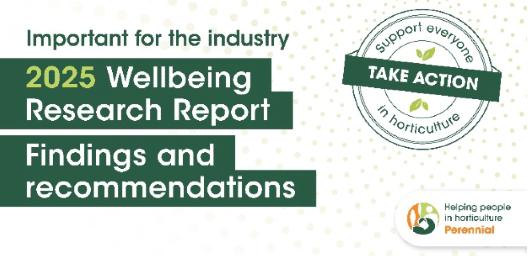
In Spring 2024, Perennial partnered with the University of Exeter’s Social Innovation Group (SIG) to conduct a major new study to better understand the emotional, physical and financial wellbeing of those who work with plants, trees, flowers and grass, and the ways they can be better supported.
Building on the findings of the 2021 survey, this new research gives an updated, and more in-depth view of the challenges people in horticulture are facing, many of which will come as no surprise to those working in the industry.
The findings are clear
Horticulture professionals continue to experience serious and sustained wellbeing challenges. The research, based on a comprehensive survey of people working across the sector, highlights worrying trends in physical discomfort, mental wellbeing, and financial confidence.
Key statistics include:
- 52% of people have a health condition that is expected to last more than 12 months – 12% higher than in 2021
- 84% of people told us that they had experienced back and joint pain in the last 6 weeks and 51% of people didn’t seek advice
- 83% of people within horticulture scored low or average for their wellbeing using a recognised scale
And 32% stated they do not have an emergency fund, with 1 in 10 saving no money at all, pointing to the persistent financial stress faced by many across the industry.
These results highlight the urgent need for action across the industry, as Julia Hayne, Director of Services at Perennial explains:
“The scale of the very real challenges those working in horticulture are facing will not surprise people across the industry. We are living through a period of significant social and political change that has the potential to impact us all. With uncertainties about the future, people’s ability to manage the everyday challenges is being put to the test, from rising prices, increased job insecurity and longer health care waiting lists.
“Ill health is the leading reason why people seek our help. This often means people have to take time off work, which impacts their income, their ability to pay their bills and their family life. In some cases, it means they are unable to return to the job they love.
“Our Wellbeing Research provides the industry with a clear insight into the causes and impact of poor wellbeing. It highlights how individuals across the sector feel about their wellbeing and the issues that are important to them. Over the last three years we have led targeted interventions to improve the health and wellbeing of the industry and this work is beginning to move the dial, in areas of physical and mental health. But we are aware much, much more needs to be done.
“It is essential that we develop an industry-wide understanding of the challenges people face through life and come together to identify real world solutions that make a long-term difference. As a charity we can’t do this alone - collaboration is essential if we want to achieve meaningful change."
This is further emphasised by Prof Michael Leyshon, Professor (Associate) in Social Geography and Dr Shukru Esmene, Research Fellow, both from the University of Exeter.
“Perennial’s Health and Wellbeing Survey 2024 has shed light on key issues that workers in the horticulture sector experience. The issues of particular interest, which were also prominent in Perennial’s 2021 survey results, include the reporting of lower life satisfaction and higher prevalence of low or medium mental health scores compared to national averages. These areas need sector-wide action to address and will take time to solve.”
Take action now
Perennial is committed to working in collaboration with the sector to act on these findings, but it will need everyone in the industry to take action.
Some steps to get started for a healthier, more supported horticulture community include: -
- Download, read and share the Wellbeing Research Report.
- Hold conversations in your organisation about the ways you will take action.
- Join Perennial’s free Mental Wellbeing in the Workplace webinars throughout May-November.
- Make everyone aware of the charity’s free advice, information and support available for their health, money, career and life challenges
- Tell Perennial what you're doing or plan to do to inform and inspire others.
Visit perennial.org.uk/research for more information on all the above and take action today.