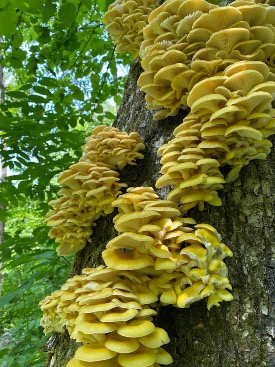
 An international alliance of mycologists that includes the Royal Horticultural Society (RHS), Natural England and Cardiff University in the UK, called BIE-GOM, is calling on the public not to buy invasive mushroom growing kits this Christmas after seeing interest soar in recent years.
A risk assessment published by the Non-Native Species Secretariat in September showed the golden oyster mushroom (Pleurotus citrinopileatus) to be a high-risk invasive species which is now established in the wild in two locations in the UK, with the most likely pathway of introduction being escape or release from commercially available cultivated stock such as grow kits.
The edible golden oyster mushroom is a wood decay fungus and while stable in its native habitat in East Asia, has proved invasive elsewhere. Its wind-dispersed spores can travel tens or even hundreds of kilometres making containment almost impossible. Since its arrival in the US in 2012, it has spread across 25 states and approximately two million square kilometres and has been shown to as much as halve the beneficial wood-inhabiting native fungi.
The amount of deadwood habitats present in UK woods and forests is already well below favourable amounts to support forest ecosystems, and this reduction in fungal diversity and richness that follows golden oyster invasion impacts the species that depend on them even further; from fungus-feeding beetles and other invertebrates to rare deadwood specialists such as the violet click beetle as well as the birds and bats that feed on them.
It is currently still legal to sell the golden oyster commercially, with grow kits widely available online and through major retailers. Many smaller companies and organisations, including the RHS, have taken voluntary action to stop selling the golden oyster mushroom and no longer exhibit it at events, but without unified collective action the spread of the fungus is set to continue. There is a collective call from the mycological community, including an open letter drafted by UK mushroom cultivation specialists Mycopunks, featuring signatures from cultivators, academics and policymakers, for a total ban on its sale and for government to address the biosecurity blind spot by developing a UK strategy for invasive fungi.
Jassy Drakulic, RHS Plant Pathologist, said: “The growing public interest in fungi is something to celebrate, but as they become more widely grown and sold, we must also recognise the biosecurity risks that can accompany them. The escape of the golden oyster mushroom in the UK highlights a significant gap in how invasive fungi are managed. Fungi are difficult to track in the wild, living mostly unseen until they fruit, so we need stronger policies to prevent introducing species that can permanently alter native ecosystems. Developing a dedicated strategy for invasive fungi is essential if we are to safeguard biodiversity for the future.”
Aishwarya Veerabahu, mycologist at the University of Wisconsin-Madison USA, said: “Every golden oyster mushroom kit sold gives the golden oyster a chance to establish in nature and spread from there. Mushroom kits helped the golden oyster rapidly spread across the US and Canada; in less than a decade, it colonised vast areas of North America and its full ecological impacts are still unfolding. Fungi are the foundation of forests and we’re beginning to understand how invasive species are impacting local biodiversity and disrupting their complex relationships. Golden oysters haven’t spread too far in the UK yet, so there’s a fighting chance of preventing it from becoming invasive! We’re asking people to hold off on buying mushroom kits to protect the UK’s fungal biodiversity and favourite native edibles.”
For information on growing mushrooms and for a list of growers who stock native fungi, visit: www.rhs.org.uk/biodiversity/grow-your-own-mushrooms-outdoors
Picture: Golden oyster mushroom credit Aishwarya Veerabahu.