Garden retailers are balancing more pressures than ever. Rising freight costs, limited warehouse space, staffing challenges and shorter decision-making windows are all influencing what businesses buy and how much stock they are willing to hold.
At Sunnii Lifestyle, we are seeing retailers take a more selective approach to range planning. Buyers still want variety and products that give customers a reason to purchase, but they are becoming more precise about where they invest.
Rather than committing heavily to entirely new collections, many are choosing smaller quantities of carefully selected products. This may involve extending an established range, introducing a new colour or configuration, or adding a limited number of premium statement pieces.
This approach can reduce risk without reducing customer choice.
Looking beyond the unit price
Margin erosion rarely comes from one cost alone.
Increased freight, excess stock, storage, markdowns and complicated supplier arrangements can all reduce profitability. A competitive buying price can quickly become less attractive once the full operational cost of bringing a product to market is considered.
Protecting margin therefore means looking at the complete product lifecycle.
How much stock must be committed to? Will it require additional storage? Is the range easy to understand, display and sell? Can it be adapted without starting again?
At Sunnii Lifestyle, we help retailers create distinctive collections without adding unnecessary complexity. This can include established retail-ready ranges, tailored product adaptations, own-label collections and fully bespoke development.
More variety, with greater control
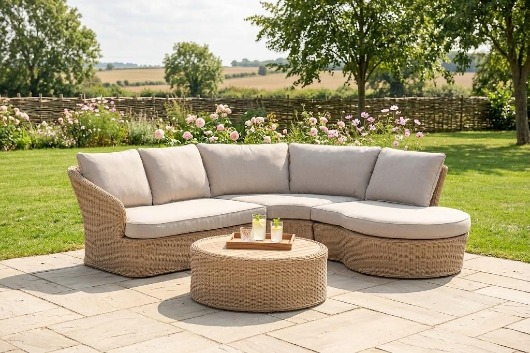
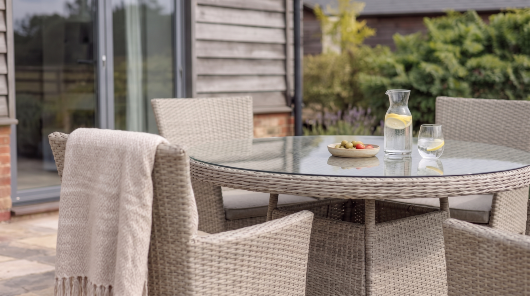
Garden furniture customers have different spaces, budgets and priorities. Some need compact patio solutions, while others are looking for larger dining sets, lounge collections or higher-value statement pieces.
The challenge is offering enough choice without overcommitting to stock.
By supporting varied quantities across selected collections, we can help retailers build a broader and more relevant offer while keeping individual commitments manageable.
Successful ranges can also be adapted rather than replaced. A new table size, seating configuration, fabric, weave or finish can refresh an existing collection while retaining familiarity for retail teams and customers.
Labels, packaging, barcodes, assembly guides and supporting materials can also be developed around the retailer’s brand.
Less time managing, more time selling
Time has become one of retail’s most valuable resources.
Teams are often expected to manage more responsibilities, while seasonal crossover periods leave less time for product training. When a collection is difficult to understand, staff may struggle to explain materials, functions or price differences confidently.
Clear product information, coordinated ranges and dependable sales support can help reduce that pressure.
As Sarah Crombie director of operations explains: “Our role goes beyond supplying furniture. We aim to make it easier for retailers to introduce, present and sell their collections successfully. By supporting range planning, product information, imagery, quality control and delivery, we help reduce operational pressure and give retail teams more time to focus on customers and sales.”
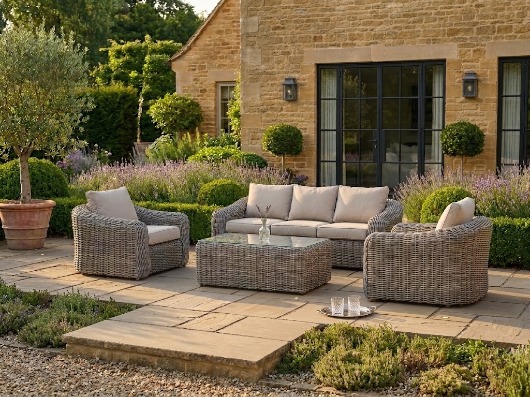
A more flexible approach
Our flexible approach allows retailers to shape orders around their available space, customer profile and sales expectations rather than working around a rigid supply model.
Smaller, more considered commitments do not have to mean smaller opportunities. With the right product mix and supply structure, retailers can offer greater variety, reduce stock exposure and protect a more comfortable margin.
The question is no longer simply:
“How much stock should we buy?”
It is:
“How can our range work harder for our business?”