Four years after environmental horticulture became the first sector hit by the full impacts of Brexit checks, businesses are still grappling with soaring costs, significant delays, stock damage, and excessive bureaucracy. These challenges drive up costs and limit consumer choice, leaving the industry in an increasingly precarious position.
The UK’s environmental horticulture sector is a vital contributor to the economy and a linchpin of the green agenda. Plants, trees, and flowers produced domestically were valued at £1.7 billion in 2023, while imports of plants and plant material totalled £780 million, with 99% sourced from the EU. These figures underscore the sector’s importance to economic growth and its support of millions of UK gardeners, landscapers, and retailers. However, its reliance on international connections, particularly with the EU, exposes vulnerabilities to disruptions in trade and supply chains.
While the sector’s value is undeniable, increasing domestic production to substitute imports faces significant hurdles:
- Labour shortages: In 2023, growers reported a 4% vacancy rate, plus only being able to source 87% of the seasonal labour required. This reflects economic pressures, including rising wages, increased employer costs such as National Insurance contributions, and seasonal challenges caused by adverse weather (Source: HTA Wages & Labour Benchmarking Survey, 2023).
- Investment and land constraints: One-third of the UK growers who are not planning to increase production in the next five years cited access to sufficient labour as the reason, 40% cited a lack of confidence in investing, and 16% identified limited access to land as barriers to growth (Source: Horticulture Business Survey, 2022).
These challenges and the financial burdens of trade create a difficult operating environment for businesses across the sector.
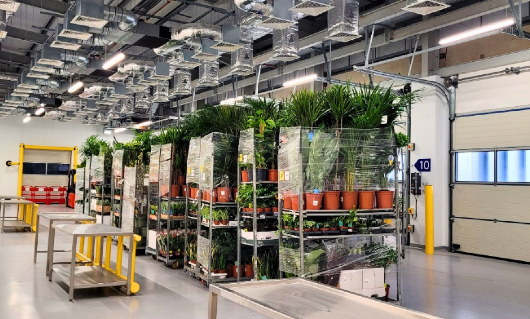
Current policies, such as the Common User Charge (CUC), disproportionately increase costs for small and medium-sized enterprises (SMEs), making up approximately 95% of the environmental horticulture sector. Meanwhile, inadequate infrastructure at Border Control Posts (BCPs) leads to delays and stock waste. The lack of a mutual plant health agreement further disadvantages UK businesses compared to their EU competitors, exacerbating friction and limiting trade opportunities.
Stuart Tickner, Provender Nurseries, said: "With the introduction of the Border Target Operating Model (BTOM) off the back of Brexit, there were a lot of unknowns on how we were going to import plants and how the Border Control Posts (BCPs) were going to operate, including the costs associated with using them and how the plants were going to be handled. This is why we chose to make the huge investment and hard work to become a Control Point. However, we still see cost increases from suppliers, hauliers, and import costs themselves. All of the frictions around the BCPs have meant some hauliers, drivers, and even growers have decided they don't want to export to the UK anymore.
“Since Brexit, there have been a lot of other changes affecting the industry, like the transition to peat-free growing media, pre-labelling in the EU being removed, and, of course, the rise in tax on employers. All of these changes, on top of a very challenging season due to the continued rain last year, made the industry struggle.
“As an industry, we need some stability. The government sadly cannot control the weather, but they can settle the industry by being ambitious and speedy to get a new SPS/ plant health agreement in place."
Paolo Arrigo, Seeds of Italy, remarked: “Seeds of Italy specialises in hobby packets of heritage, ethical, regional and slow food endangered vegetable seed varieties with lost flavours, which has become very hard to bring those in. Along with the rest of UK environmental horticulture, we have been transparent and compliant with all the new bureaucracy. It seems that despite trying and after 4 years, there are still inconsistencies, misinterpretations and grey areas. Importers feel picked on - it is a lottery of how goods arrive, with a ‘them and us’ culture. The UK has a passion for plants – the oldest Horticultural society and Botanical gardens in the world, not to mention the plant hunters - Darwin springs to mind. That passion is reflected in top-end gardeners and seeds merchants like myself with the Franchi seed brand. We urgently need to rejoin the customs union and the Single Market to give the UK a boost and restore our standing in the world.”
Jennifer Pheasey, Director of Public Affairs at the Horticultural Trades Association (HTA), said: “The environmental horticulture sector, vital to the UK’s green economy, has suffered significantly from the effects of Brexit for too long. Four years after leaving the EU, the anticipated benefits have yet to materialise, while we continue to face challenges that threaten the stability of our businesses and trade.
“The past year has been marked by severe trade border issues, including significant delays, excessive red tape, and rising costs, all of which limit consumer choice. These difficulties are further compounded by unpredictable weather and the restrictions outlined in the government’s 2024 autumn budget. These obstacles are not only persisting; they are worsening. Now is the time for action. As we approach 2025, the sector needs support to overcome these challenges and unlock its full potential. We welcome the ambition to reset relations with the EU, but immediate action is necessary to foster growth, and repairing UK-EU relations is crucial for addressing these challenges.
“A plant health agreement based on mutual recognition could provide a long-term solution. However, it must be combined with immediate actions to improve current border operations. Any such solution would also require time and support to restore supply chains and trading relationships. The border issues extend beyond UK-EU trade and encompass other related policies. There is an urgent need for comprehensive oversight of trade policies, including those concerning Northern Ireland, GB plant passport regulations, and CITES requirements. Without coordinated action, the sector risks facing increased friction, higher costs, and reduced competitiveness, undermining green growth and adversely impacting consumers.”
The HTA is calling for:
- Simplified border processes and trusted trader schemes to ease compliance for SMEs.
- Investment in BCP infrastructure to reduce delays and minimise stock damage.
- An EU-UK reset to include a Plant Health agreement
The HTA remains committed to working with policymakers to encourage them to seize this opportunity to deliver the unrealised benefits of Brexit and secure a thriving future for the sector.