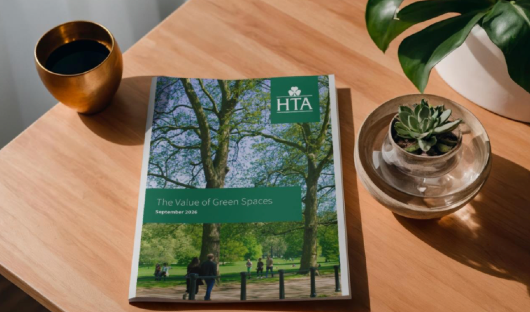
The UK is underinvesting in one of its most effective tools for tackling climate change, improving public health and supporting economic growth, according to a landmark report published today by the Horticultural Trades Association.
Launched at Horticulture, The Conference, The Value of Green Spaces is the third report in the HTA’s Value series, following The Value of Plants (2023) and The Value of Gardens (2025), setting out the economic, environmental and health contribution of environmental horticulture to the UK. This latest report demonstrates that parks, street trees, public planting and wider green infrastructure should be treated as essential national infrastructure alongside housing, transport and energy.
Bringing together significant economic, environmental and health evidence alongside new YouGov polling of 2,376 UK adults, the report shows how green spaces can cool towns and cities during heatwaves, reduce flood risk, improve mental and physical health, support biodiversity and help create healthier, more resilient communities.
The report warns the UK is dismantling its natural armoury against extreme weather. As heatwaves, flooding and drought become more frequent, and pressure on the NHS continues to grow, it argues that investing in green spaces is no longer an optional environmental enhancement but a practical solution to some of the UK's biggest challenges.
Following the UK's record-breaking heat over the past two years and more than 2,700 excess heat-related deaths during May and June 2026, the report highlights the vital cooling power of urban planting. It finds that one large street tree can provide the cooling equivalent of around 10 air-conditioning units, while green infrastructure can reduce city temperatures by up to 5°C during heatwaves. Grass surfaces can be up to 24°C cooler than asphalt, and trees have been shown to reduce harmful heat exposure by up to 96%.
As the UK's ageing population puts unprecedented pressure on public finances, the report also identifies green spaces as a form of preventative health infrastructure, with evidence linking access to nature to better physical and mental health and reduced pressure on NHS services.
- Saving General Practice: Time spent in green spaces saves the NHS £148 million per year in reduced GP visits, which is enough to pay the salaries of more than 3,500 nurses.
- Therapeutic Horticulture: A therapeutic gardening pilot scheme in East Lothian saw patients referred for mild-to-moderate depression require 67% fewer GP appointments within three months of finishing the programme.
- Quality of Life: Access to green spaces is linked to healthier ageing, improved mental wellbeing and a higher quality of life. People living in neighbourhoods with the highest access to green spaces also live an average of 2.5 years longer.
- Children and Green Space: Children living more than a 20-minute walk from green spaces have over two hours more screen time and poorer mental health than those living within a five-minute walk.
The report also highlights growing inequalities in access to green infrastructure. It warns that 409 square kilometres of private green gardens are at risk of being paved over in the next five years, while public parks lost £690 million in funding between 2010 and 2021. Around 8 million people now live more than a 15-minute walk from a green space, with lower-income households and ethnic minority communities disproportionately affected.
The report also highlights the economic contribution of the environmental horticulture and landscaping sectors that create and maintain the UK's green spaces. Together (excluding garden retail, garden goods manufacture, and wholesale), they contribute around £31 billion to UK GDP, support more than 500,000 jobs, and generate approximately £7 billion in tax revenue through ornamental plant production, landscaping, tree planting, and garden tourism.
New YouGov polling reveals strong public support for protecting and expanding green spaces. The findings demonstrate a clear public mandate for greener communities at a time when the government is planning significant housing and infrastructure investment.
- 93% say parks and trees are important in new communities.
- 85% want existing green spaces protected.
- 76% support increasing public green space through planning.
- 50% believe nature should be prioritised even if it reduces land available for housing development.
However, despite strong public support and recognition of their benefits for wellbeing, quality of life and the environment, the report identifies a significant "say-do gap". Only 12% of UK adults have planted trees or greenery to provide shade or cooling around their home, and just 4% have replaced hard surfaces with planting or permeable alternatives to improve flood resilience.
The report calls on the government, local authorities, developers, businesses and communities to work together to protect, expand and sustainably fund green infrastructure, highlighting successful models already operating in the UK and internationally.
Fran Barnes, Chief Executive of the Horticultural Trades Association, said: “Green spaces quietly work for us every day. They cool our towns and cities during heatwaves, absorb rainwater during storms, improve air quality, support wildlife and help keep us physically and mentally healthy. Yet they are too often treated as an optional extra rather than the essential infrastructure they are.
“As the government plans new homes, invests in infrastructure and prepares for a changing climate, green spaces must be built into those decisions from the start, not added as an afterthought. Investing in green infrastructure is investing in healthier people, stronger communities and a more resilient UK.”
The report calls for an eight-point action plan for Government
The report concludes with eight recommendations for the government to better protect, expand and integrate green infrastructure into policy, planning and public services.
- Establish a cross-government green infrastructure taskforce to unlock the environmental horticulture sector's contribution to economic growth, climate adaptation, biodiversity and preventative health.
- Develop a long-term water resilience strategy focused on capturing, storing and reusing water, including rainwater harvesting in new developments and recognising the needs of the UK's green spaces.
- Introduce a Greening Business Rates Relief to incentivise businesses that create and maintain green infrastructure, including green roofs, rooftop gardens, tree canopy car parks and staff green spaces.
- Raise the profile of therapeutic horticulture through a national health and wellbeing campaign and support wider adoption of nature-based interventions across the NHS.
- Put green design at the heart of planning by mandating a Green Space Factor in local plans and adopting the 3:30:300 urban forestry metric for new developments.
- Include street trees and hedging in national planting targets, and measure tree survival rates alongside planting numbers to better reflect the UK's urban greening efforts and support long-term maintenance.
- Align public procurement with UK growers by ensuring planting specifications reflect UK growing conditions and future crop availability, and support local sourcing and UK SMEs.
- Strengthen Local Green Space protections by allowing communities to nominate and protect valued green spaces at any time, not just during local plan reviews.
The report, launched at Horticulture, The Conference, is available to download from the HTA website.